
Choosing cigar display cases for global buyers requires more than attractive glass and polished wood. The right case protects presentation, supports stable storage conditions, and fits local retail requirements. Buyers should assess climate, shipping distance, store layout, and expected customer traffic before placing an order.
I have seen well-designed cases fail because their seals were overlooked. A humid coastal showroom needs different protection from a dry inland store. Look for reliable hinges, smooth sliding doors, strong tempered glass, and accurate humidity-control options. Interior cedar lining may improve aroma management, but its quality and treatment should be verified. Ask suppliers for material details, production photographs, testing records, and clear maintenance instructions.
Compliance also matters across borders. Confirm that the product meets applicable safety, labeling, packaging, and import requirements in the destination market. A responsible supplier should communicate honestly about materials, lead times, warranty coverage, and replacement parts. Avoid vague promises.
No case is perfect.
Even experienced buyers can underestimate installation space or cleaning time. A beautiful cabinet may become impractical when staff must refill it daily. Consider adjustable shelves, secure locks, lighting heat, energy use, and visibility from the customer’s normal viewing angle. For international projects, sample approval is valuable before bulk production. This guide examines how to compare cigar display cases with practical judgment, professional standards, and respect for lawful adult retail environments. The goal is not simply to choose the most impressive model. It is to select a dependable solution that performs consistently after delivery.
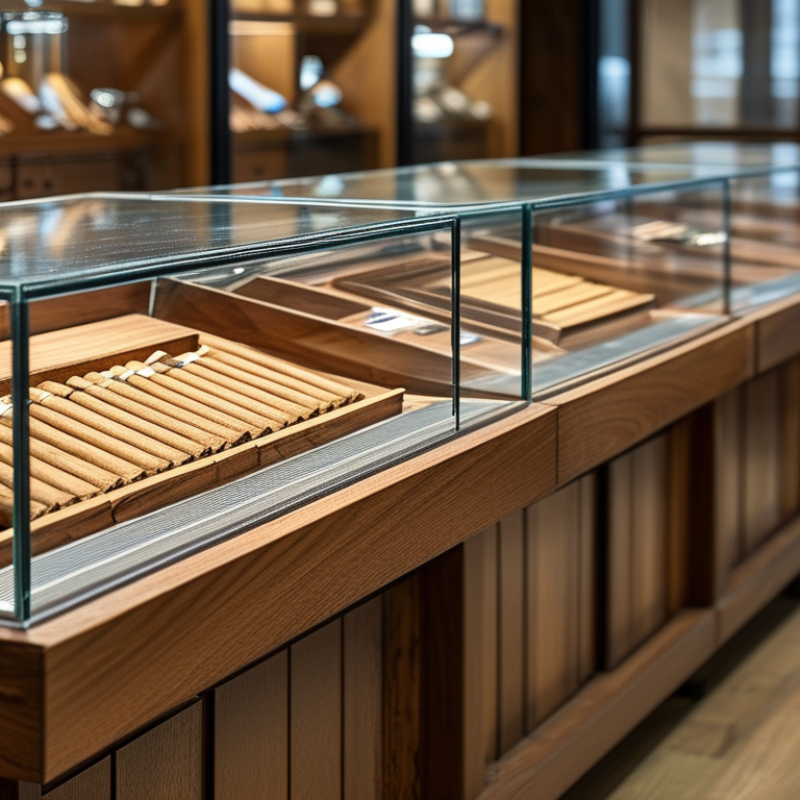
A cigar display case should begin with purpose, not appearance. Is it for retail presentation, private collection, short-term holding, or transport? Each use creates different demands. A shop counter needs clear visibility and easy access. A collector may value stable humidity and protection from light. A traveling buyer needs a compact case with a firm seal. Purpose determines capacity, layout, and maintenance effort. It also prevents paying for features that will rarely be used.
Conditions matter more than polished wood or bright hardware. Cigars respond poorly to excessive heat, dry air, sudden humidity changes, and direct sunlight. Place the case away from windows, radiators, kitchens, and strong ventilation. For longer storage, check whether it supports controlled humidity and a reliable hygrometer. The seal should feel even around the lid, without gaps or loose corners. Interior surfaces must be clean, odor-neutral, and free from rough edges. Test the hinges and trays before purchase. Small faults become expensive annoyances.
Global buyers should examine climate, shipping time, and local product regulations. A humid coastal warehouse differs sharply from a dry inland room. During transit, cushioning and moisture protection may matter more than decoration. Ask for material details, care instructions, replacement parts, and inspection records. These questions reveal practical expertise and supplier reliability. I have found that attractive cases can underperform when ventilation is misunderstood. That deserves a second look. Measure the available space, estimate actual inventory, and leave room for cleaning. A case that looks perfect online may prove too heavy, too sealed, or difficult to service.
How to Choose Cigar Display Cases for Global Buyers?
The right case size depends on display goals, storage conditions, and available space. A compact case may suit a small collection, while larger cases require stronger shelves and more stable placement. Measure the cigars, trays, and interior clearance before ordering. Leave enough room for air movement and easy handling. A tightly packed case looks efficient but often becomes inconvenient.
Capacity should reflect realistic growth, not wishful thinking. If you currently store 30 cigars, a 50-count case may provide useful flexibility. However, oversized interiors can make humidity control less consistent. Choose a case with a reliable seal, an accurate hygrometer, and a suitable humidification area. Interior materials should be smooth, clean, and resistant to unwanted odors. Cedar is commonly selected, but its scent can be stronger than expected.
Tips: Sketch the interior layout first. Consider adjustable dividers, removable trays, and vertical clearance. Keep frequently selected items near the front. For international buyers, check shipping dimensions, local climate, and voltage requirements for electronic components. A case that performs well in a dry warehouse may need different maintenance in a humid coastal region. I have seen buyers focus too much on appearance and overlook access. That mistake is easy to make.
How to Choose Cigar Display Cases for Global Buyers?
Material affects both presentation and storage stability. Spanish cedar is valued for its aroma, moisture buffering, and gentle contact with cigars. However, its scent may become too strong in a poorly ventilated case. Acrylic offers clear viewing and lower shipping weight. Glass looks refined but adds breakage risk and considerable weight. Metal frames can improve strength, yet exposed metal may create condensation problems in humid climates.
Humidity control deserves careful inspection. Choose a case with a dependable hygrometer, an evenly distributed humidification system, and a tight but adjustable seal. A target near 65–72% relative humidity is commonly used, but local climate and cigar condition can change the practical setting. Check the reading with a separate calibrated device. One display can mislead. In field inspections, uneven airflow often leaves one corner damp while another feels dry. That flaw is easy to miss.
Protection features matter during international transport. Look for UV-resistant panels, cushioned corners, reinforced hinges, and secure closures. A lock may prevent casual access, but it does not replace impact protection. Review packaging quality, replacement-part availability, and compliance with destination-country requirements before ordering. A beautiful case can still fail if its seal weakens after repeated opening. Test the lid, gasket, and tray alignment several times. Small imperfections deserve attention before a large shipment.
| Case Type / Main Material | Typical Humidity Control | Protection Features | Display Visibility | Moisture and Temperature Behavior | Typical Capacity | Best Use | Key Buying Considerations |
|---|---|---|---|---|---|---|---|
| Glass-top wooden humidor | Usually passive control using a humidification device and hygrometer; requires regular refilling and calibration checks. | Solid construction, gasketed lid, lock option, Spanish cedar lining, and removable trays or dividers. | High; the transparent top allows direct viewing while keeping the lid closed. | Wood helps buffer short-term humidity changes, but the case should be kept away from direct sunlight, heaters, and air conditioners. | Approximately 25–150 cigars, depending on internal dimensions and tray layout. | Home storage, premium retail presentation, and gift-oriented displays. | Check seal quality, lining material, hygrometer position, tray clearance, and resistance to warping. |
| Acrylic display case | Passive control is possible with humidity packs or a small humidification unit, but airtightness varies by design. | Lightweight impact resistance, dust protection, transparent panels, and optional lockable hinges. | Very high; clear panels provide an unobstructed view from most angles. | Acrylic does not naturally regulate humidity; it can expand or contract with temperature changes and may scratch more easily than glass. | Approximately 10–100 cigars, depending on the case format. | Retail counters, trade displays, lightweight shipping, and promotional presentations. | Verify UV protection, panel thickness, scratch resistance, edge sealing, and packaging for international transport. |
| Tempered-glass cabinet | Often paired with an electronic humidification system for larger storage volumes; requires power access and monitoring. | Tempered safety glass, lockable doors, metal frame, adjustable shelves, and optional UV-filtering glass. | Excellent; broad front and side panels support retail-style presentation. | Glass is moisture-neutral and offers limited insulation; stable room temperature and accurate circulation control are important. | Approximately 100–1,000+ cigars, depending on cabinet size and shelf spacing. | Specialty retailers, hospitality venues, collectors, and high-volume inventory storage. | Confirm voltage compatibility, plug standards, noise level, condensation management, door seal, and replacement parts. |
| Metal travel case | Usually limited passive control using a humidity pack; not intended for long-term aging without a reliable seal. | Rigid shell, crush resistance, locking clasps, foam or molded inserts, and water-resistant seals on selected models. | Low to medium; windows may be included but are not the primary feature. | Metal transfers external heat quickly, so the case should not be left in vehicles, checked luggage, or direct sunlight for extended periods. | Approximately 3–20 cigars. | Travel, shipping samples, outdoor events, and short-term transport. | Check impact rating, corrosion resistance, gasket performance, interior cushioning, and airline or courier handling requirements. |
| Leather or textile travel case | Generally relies on a humidity pack placed inside a sealed inner compartment; humidity retention depends heavily on the liner and zipper or clasp. | Soft impact protection, individual cigar tubes or slots, scratch protection, and compact construction. | Medium; opening the case is normally required for inspection. | The outer material offers little thermal insulation; avoid prolonged exposure to rain, high heat, and rapid environmental changes. | Approximately 2–12 cigars. | Personal travel, short business trips, and compact gift packaging. | Inspect stitching, odor-free lining, moisture resistance, insert dimensions, closure durability, and cleaning requirements. |
| Airtight plastic storage box | Suitable for passive humidity packs when the lid seal is effective; a digital hygrometer is recommended for monitoring. | Water-resistant seal, stackable body, impact resistance, secure latches, and removable internal separators. | Medium to high when transparent or fitted with a viewing panel. | Plastic does not buffer humidity like porous wood; airtightness and protection from heat are essential. | Approximately 10–150 cigars, depending on box dimensions. | Warehouse storage, export shipments, budget-conscious buyers, and organized inventory management. | Confirm food-contact safety where relevant, plastic stability, odor neutrality, seal replacement options, and stacking strength. |
Global buyers should judge cigar display cases beyond appearance.
Design affects temperature stability, product visibility, and daily handling. A clear front, adjustable shelves, and warm neutral lighting help staff inspect stock without opening the case repeatedly. Avoid excessive glass thickness. It can improve impact resistance, but it may also reduce visibility and increase weight.
Security must suit the store’s actual environment.
Locking doors, concealed hinges, shatter-resistant panels, and anchored bases reduce opportunistic access. The WHO’s 2023 global tobacco report estimated 1.25 billion tobacco users in 2022, showing the scale of lawful retail demand. Still, security should not create an intimidating barrier for adult customers. A low-glare viewing angle and reachable controls support responsible, age-verified service. Local regulations remain essential.
Maintenance determines whether the case performs after installation.
ISO 3402 specifies tobacco conditioning at 22°C and 60% relative humidity, with controlled tolerances. That reference helps buyers compare sensors, seals, and humidification systems. Choose removable trays, washable surfaces, and a visible hygrometer. Keep the system simple. Complex controls often become neglected. A practical weakness is easy to miss: a perfectly sealed case can develop uneven humidity when shelves block airflow. Test several shelf positions during commissioning, then record temperature and humidity readings. Recheck them after seasonal changes. Cost savings may look attractive, but difficult cleaning and poor accessibility usually create higher operating effort.
How to Choose Cigar Display Cases for Global Buyers?
Check Global Shipping, Compliance, Cost, and Supplier Reliability
Global buyers should assess shipping conditions before admiring a display case’s finish. Measure the packed unit, not only the cabinet. Oversized cartons can trigger higher freight charges and warehouse fees. Ask about moisture protection, corner guards, pallet standards, and cargo insurance. If the case includes lighting, confirm voltage, plugs, and electrical documentation for the destination market. Wooden packaging may also require treatment certificates.
Compliance needs careful checking. Request material specifications, safety data, and accurate customs descriptions. Avoid suppliers that suggest vague declarations. That can create delays. A well-prepared supplier should provide drawings, packing lists, invoices, and test records promptly. Requirements differ between countries, so buyers should verify details with customs agents or qualified local advisers. Display cases may also need restrictions on glass, coatings, electrical parts, or treated wood.
Price alone is a weak comparison. Calculate the landed cost, including tooling, samples, freight, duties, installation, and possible replacement parts. Ask whether humidity control, locks, shelves, and lighting are included. Supplier reliability appears in small actions: clear replies, consistent measurements, production photos, and documented inspections. Request a sample or pre-shipment check when practical. References can help, but they are not perfect proof. I have seen polished samples hide weak packaging decisions. That mistake is expensive. A written quality checklist, agreed tolerances, and payment milestones create stronger protection than friendly promises.
