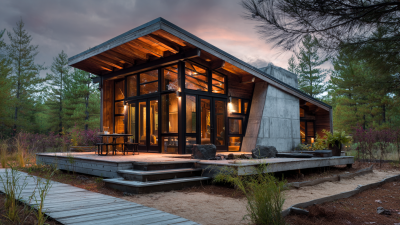
What Are the Best China Prefab Cottages?
What Are the Best China Prefab Cottages? The answer depends on climate, certification, materials, transport, and long-term maintenance. China offers many factory-built options, from compact timber cabins to steel-frame holiday homes. However, attractive renders can conceal weak insulation, unclear warranties, or unsuitable plumbing systems.
China’s Ministry of Housing and Urban-Rural Development promoted prefabricated construction as a major industry direction. Its national policy targeted prefabricated buildings for 30% of new construction by 2025. The McKinsey Global Institute also reported that modular construction could reduce project timelines by 20% to 50%. Cost reductions may reach 20% under suitable conditions. These figures are useful, but they are not guarantees.
Mark Farmer, author of Modernise or Die and a respected construction-industry adviser, warned that “MMC is not a silver bullet.” That warning matters for Pre Fab Cottages. A 35-square-meter cottage may leave a Chinese factory with sealed wall panels, completed wiring, and factory-fitted windows. Yet coastal salt air, freezing winters, or difficult mountain roads can quickly expose design weaknesses.
The best China prefab cottages should therefore balance factory precision with local adaptation. Buyers should inspect steel thickness, insulation values, fire resistance, drainage details, and replacement-part availability. They should also request independent testing and clear installation drawings. A low purchase price can become expensive later. The answer is not perfectly neat. Good judgment still matters.

What Defines China Prefab Cottages? Types, Materials, and GB/T 51129 Standards
What Are the Best China Prefab Cottages?
China prefab cottages are factory-produced homes assembled quickly on prepared foundations. Their defining feature is not simply speed. It is the controlled connection between design, manufacturing, transport, and site installation. Common types include panelized cottages, volumetric modular units, and hybrid structures. Panelized systems arrive as wall, floor, and roof sections. Volumetric modules arrive with larger rooms already enclosed. Hybrid designs combine both methods.
Materials influence comfort and service life. Light-gauge steel offers dimensional accuracy and resists termites. Timber can create a warmer interior, but it needs careful moisture protection. Reinforced concrete panels provide mass and durability, while insulated sandwich panels reduce heat transfer. Roof membranes, vapor barriers, window seals, and drainage details deserve equal attention. Small omissions become expensive later.
GB/T 51129 is China’s Evaluation Standard for Prefabricated Buildings. It evaluates prefabrication through areas such as structural systems, envelope and partition components, interior finishing, and building services. It should guide assessment, not replace project-specific fire, energy, structural, and local approval requirements. Buyers should request drawings, material certificates, connection details, and installation records. Factory experience matters here. A tidy workshop can still hide weak site coordination. I have seen attractive modules lose performance through poor joints and rushed foundations. The standard helps create discipline, but it cannot correct every design mistake.
How Do Modular, Panelized, and Kit Cottages Compare by Cost and Build Time?
What Are the Best China Prefab Cottages?
China prefab cottages usually fall into three groups: modular, panelized, and kit-built homes. Their costs differ because factories complete different amounts of work. A modular cottage arrives with floors, walls, wiring, and plumbing largely installed. This option often costs more upfront, but it can reduce site labor and shorten construction to two or four weeks after delivery.
Panelized cottages ship as wall, roof, and floor sections. A local crew assembles them on a prepared foundation. They usually offer a practical balance between price and speed. Factory production may take three to six weeks, while on-site assembly can take one to three weeks. However, inaccurate measurements or delayed permits can quickly remove the expected savings.
Kit cottages generally have the lowest purchase price. They include labeled components, fasteners, and assembly drawings. Yet the buyer must arrange more labor, insulation, interior finishing, and utility connections. A small kit may appear affordable beside a modular unit, but the final cost can rise after transport, customs, foundation work, and local engineering fees. Timing is also less predictable.
A realistic comparison should include a cost sheet with delivery, crane access, heating, windows, and weather protection. Ask for material specifications and independent inspection records. Check whether the design suits local snow, wind, moisture, and fire requirements. Some suppliers quote factory prices only. That is the part many budgets miss. A cheaper cottage is not always the faster cottage.
Which Performance Data Matter? U-Values, Wind Loads, Fire Ratings, and Lifespan
A good China prefab cottage should be judged by measured performance, not attractive drawings. The 2023 Global Status Report for Buildings and Construction states that buildings consume about 30% of global energy. Therefore, insulation deserves early attention. A lower U-value means less heat transfer. Passivhaus guidance commonly targets wall U-values near 0.15 W/m²K, although local Chinese requirements differ by climate zone. Ask for tested wall, roof, floor, and window values. Do not trust one wall-panel number.
Wind resistance needs site-specific engineering. China’s GB 50009 standard considers basic wind speed, terrain, building height, and shape. A coastal cottage may face stronger gusts than an inland project. Connections matter. Check anchor spacing, screw pull-out results, roof uplift calculations, and corner detailing. A beautiful module can still fail at its joints. I have seen specifications that mention wind pressure but omit the calculation location. That is a warning sign.
Fire performance should use a clear rating, such as 60 minutes for load-bearing, integrity, and insulation under the relevant test method. GB 8624 material classifications help, but a noncombustible panel does not make the entire cottage fire-safe. Seals, insulation, wiring, and openings also require testing. EN 1990 commonly uses a 50-year design working life for ordinary buildings, but this is not a guaranteed lifespan. Moisture control, corrosion protection, ventilation, and maintenance decide the outcome. The honest question is not “How long will it last?” It is “What will be inspected, and when?”
What Are the Best China Prefab Cottages? — Performance Data That Matter
| Prefab Cottage System |
Typical Wall U-Value
(W/m²·K) |
Typical Roof U-Value
(W/m²·K) |
Wind-Load Design Range
(kPa) |
Fire-Resistance Potential |
Expected Service Life |
Best Performance Use |
| Light-Gauge Steel Frame |
0.20–0.35
Requires continuous external insulation to reduce thermal bridging. |
0.15–0.25 |
1.0–3.0
Project-specific structural calculation required. |
Typically 30–90 minutes for tested systems using fire-rated boards and insulation. |
50+ years with corrosion protection, correct drainage, and regular maintenance. |
Good for fast assembly, consistent dimensional accuracy, and termite-prone locations. |
| Structural Insulated Panels (SIPs) |
0.15–0.25
High insulation efficiency; joints and penetrations must be sealed correctly. |
0.10–0.20 |
1.0–2.5
Depends on panel thickness, connections, openings, and foundation anchorage. |
Commonly 30–60 minutes when protected with approved gypsum-board assemblies. |
50+ years when protected from persistent moisture and ultraviolet exposure. |
Strong choice for energy efficiency and rapid installation in cold or mixed climates. |
| Engineered Timber Frame |
0.18–0.30 |
0.13–0.22 |
0.8–2.0
Shear walls, hold-downs, and roof-to-wall connections are critical. |
30–60 minutes is achievable through protected assemblies and sufficient member sizing. |
50–100 years when moisture is controlled and exterior finishes are maintained. |
Suitable for low-carbon construction, comfortable interiors, and moderate wind zones. |
| Modular Concrete Panel |
0.25–0.45
Additional insulation is normally needed to reach low-energy targets. |
0.18–0.30 |
1.5–4.0
Heavy mass can improve stability, but connections still govern performance. |
60–120+ minutes may be possible, depending on panel thickness and tested detailing. |
75–100+ years with durable concrete, adequate cover, and controlled cracking. |
Good for high durability, acoustic separation, and demanding exposure conditions. |
| Insulated Concrete Form (ICF) |
0.15–0.25 |
0.15–0.25 |
1.5–4.0
Requires engineered reinforcement and verified anchorage for the site. |
Typically 60–120 minutes, subject to concrete thickness and interior/exterior finishes. |
75–100+ years when waterproofing, drainage, and finishes are maintained. |
Strong option for thermal mass, storm resistance, and long-term durability. |
How to read the data: Lower U-values indicate better thermal insulation. Wind-load values are indicative design ranges, not universal product ratings; the final value must be calculated from the site wind speed, terrain category, building height, exposure, openings, and local building code. Fire resistance applies only to a complete tested wall, floor, or roof assembly, including framing, boards, insulation, fasteners, and joints. Service-life figures assume proper design, installation, moisture control, corrosion protection, and routine maintenance.
How Can Buyers Verify Quality Through ISO 9001 and Three-Stage Inspections?
Choosing among China prefab cottages requires more than attractive drawings and a low quotation. ISO 9001 is a useful starting point, but it certifies a quality management system, not every cottage. Buyers should request the certificate, confirm its validity, and check whether its scope covers prefabricated construction. The certification body should be independently verifiable. A factory that cannot explain its procedures clearly deserves closer attention.
A practical three-stage inspection begins with incoming materials. Inspectors check steel grades, timber moisture, insulation density, glass specifications, and delivery records. During production, they examine welds, frame dimensions, waterproofing layers, wiring routes, and fastener torque. Small deviations can become expensive after installation. The final inspection should test doors, windows, plumbing, electrical systems, surface finishes, and packing protection. Photograph each result, record measurements, and match serial numbers with approved drawings.
Use an independent inspector when possible. Factory photographs help, but they are not proof. Ask for corrective-action reports when defects appear, not only clean inspection sheets. I have seen projects pass factory checks yet suffer from damaged corners during transport. That gap matters. No checklist catches everything. Buyers should also inspect one completed sample and compare it with the contract, not memory. Some quality evidence may look convincing while remaining incomplete, especially when records lack dates, signatures, or traceable material batches.
How Should Suppliers Be Ranked by Price, Delivery, Warranty, and Compliance?
The best China prefab cottages are not always the cheapest. A reliable ranking should compare total cost, delivery control, warranty strength, and compliance evidence. Request a detailed quotation covering materials, packing, inland transport, shipping, installation guidance, and taxes. A low factory price can become expensive after missing components or unexpected port fees.
Delivery deserves practical verification. Ask for recent production records, realistic lead times, loading photographs, and a written inspection process. Suppliers should explain how delays are handled. Warranty terms must identify covered parts, response times, replacement procedures, and exclusions. A two-year promise means little without documented after-sales support. I once underestimated installation guidance, and that mistake affected the project schedule. Price alone is a poor ranking tool.
Tips: Create a scoring sheet before contacting suppliers. Give compliance and warranty higher weights than small price differences. Check structural calculations, fire performance, insulation data, electrical specifications, and local building requirements. Request test reports from recognized laboratories, but verify whether they match the exact cottage model. Suppliers that provide clear drawings, traceable materials, and honest limitations usually deserve higher scores. Some documentation may still need local review, so do not treat factory paperwork as automatic approval.
What Are the Best China Prefab Cottages?
Supplier profiles are ranked using a 100-point procurement score covering price competitiveness, delivery reliability, warranty coverage, and compliance documentation.
The balanced profile provides the strongest overall result because it combines competitive pricing with dependable delivery, a standard multi-year structural warranty, and complete documentation for export, fire safety, structural performance, and electrical compliance. Scores are normalized benchmarks for supplier evaluation rather than company-specific claims.